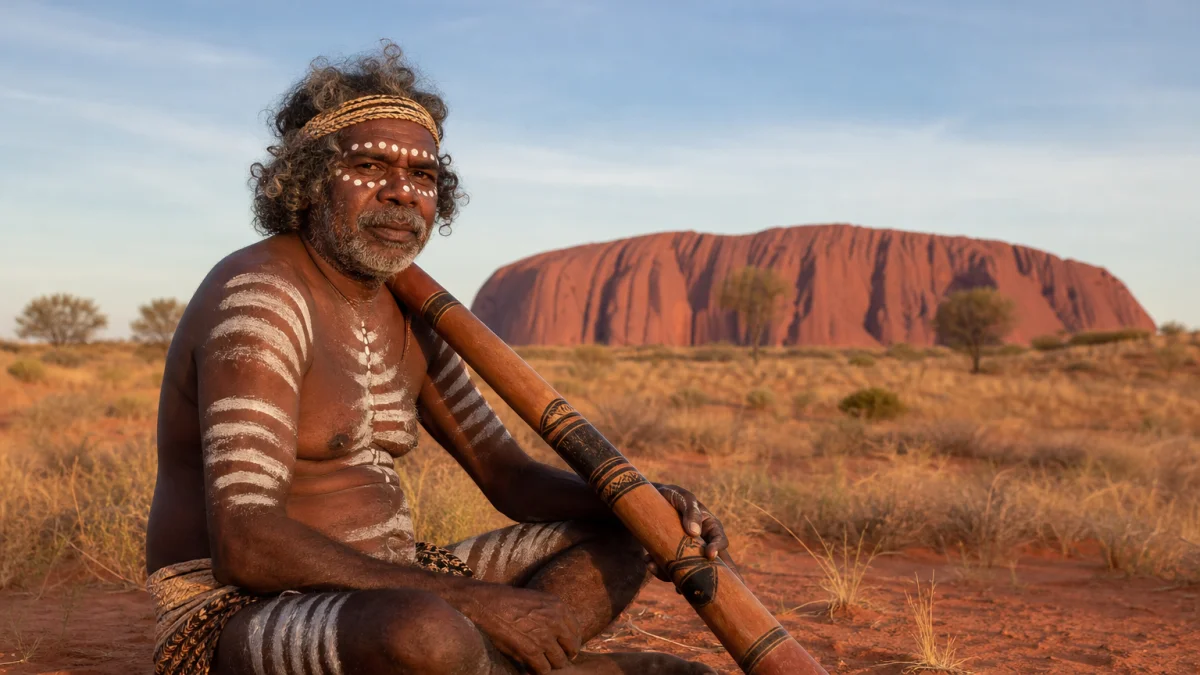
Aborigine is a noun used for a native person of a place, especially in the older or more specificclear and exact, rather than general or broad sense referring to the original peoples of Australia. In modern English, the word can sound datedno longer current; seeming old-fashioned or out of use or insensitivenot showing enough care about other people’s feelings or traditions in some contexts, so people often use more specific terms instead.
Reviewed with OpenAI Decisions. Assessment: accurate. Checked: 2026-10-30. AI assessment; not a guarantee of accuracy.
Pronunciation
AI-generated pronunciation audio (OpenAI).
Accent: General American English
IPA: /ˌæbəˈrɪdʒəni/
Easy pronunciation: ab-uh-RIJ-uh-nee (approximate spelling).
Stress: Primary stress is on the third syllable, RIJ.
Used for an Indigenous Australian person.
Reviewed with OpenAI Decisions. Assessment: uncertain — manual review needed. Checked: 2026-10-30. AI assessment; not a guarantee of accuracy.
Aborigine Meaning
an Indigenous Australian person
Part of speech: noun
Definition: a member of the peoples living in Australia when Europeans arrived
Example: The museum has an exhibit about Aboriginal art and the history of the first peoples of Australia.
Synonyms for this meaning:
- australian aborigine — Specific term for the Australian sense.
- native australian — Matches the Australian meaning, though it can sound less formal.
Reviewed with OpenAI Decisions. Assessment: uncertain — manual review needed. Checked: 2026-10-30. AI assessment; not a guarantee of accuracy.
Other Meanings of Aborigine
Meaning 2
a native person from a place
Part of speech: noun
Definition: an indigenous person who was born in a particular place
Example: The word was once used for an aborigine of the island, but modern writers usually choose a more specific term.
Synonyms for this meaning:
- aboriginal — Can fit this broader sense, though it is often used as an adjective.
- indigen — Very rare and formal; works in this broad sense.
- indigene — A noun meaning an indigenous person; appropriate in this sense.
- native — Works in the general sense of a person originally from a place.
Reviewed with OpenAI Decisions. Assessment: uncertain — manual review needed. Checked: 2026-10-30. AI assessment; not a guarantee of accuracy.
Aborigine Synonyms
Similar Meaning
- australian aborigine
- native australian
a native person from a place
- aboriginal
- indigene
- native
Reviewed with OpenAI Decisions. Assessment: inaccurate — correction needed. Checked: 2026-10-30. AI assessment; not a guarantee of accuracy.
Common Mistakes
- Using aborigine for any local person without checking the context.
- Using aborigine as a modern neutral term in contexts where a more specific term is preferred.
- Confusing aborigine with aboriginal, which is often an adjective rather than a noun.
Reviewed with OpenAI Decisions. Assessment: accurate. Checked: 2026-10-30. AI assessment; not a guarantee of accuracy.
Frequently Asked Questions
What does aborigine mean?
Aborigine usually means an Indigenous Australian person, especially in reference to the peoples living in Australia before Europeans arrived. It can also mean a person native to a place in a broader, older sense.
What is the simplest synonym for aborigine?
In the Australian sense, the closest simple synonym is Indigenous Australian. For the broader sense, native is the nearest common substitute.
Is aborigine still used in modern English?
It is still understood, but it can sound dated or inappropriate in some contexts. More specific and respectful terms are often preferred.
Reviewed with OpenAI Decisions. Assessment: accurate. Checked: 2026-10-30. AI assessment; not a guarantee of accuracy.